Thursday, September 8, 2016

REAL ESTATE TRENDS...Inside The Design Of The World's Most Beautiful Tiny House

By Seth Porges

I admit it: I’m intrigued by tiny houses. And who can blame me? Diminutive dwellings are basically everywhere these days, with at least a half-dozen cable shows devoted to the topic (yes, Tiny House Hunters and Tiny House Hunting are actually two different shows), and sites such as Curbed and Apartment Therapy offering catalogue-worthy glimpses at some of the more appealing designs.
Which is how I came across the Escape Vista: A new window-wrapped tiny home that looks less like a cramped trailer and more like a 160-square-foot version of Johnson’s Glass House or Mies van der Rohe’s iconic Farnsworth House (a site its creators cite as a direct inspiration). In fact, this is the first tiny home that’s actually caused me say to myself, “I could do this”. But before taking that plunge (and believe me, if I do there will be follow-up stories as I dive down that rabbit hole), I thought I’d call up Escape founder Dan Dobrowolski to ask him about how he made a tiny house that feels so inviting and expansive. And in case you’re looking to seriously downsize, the Vista starts at around $46,000 and can be easily transported thanks to its trailer-based design.
The Escape Vista house is just 160 square feet (Photo: Escape homes)
SMALL SIZE

“We noted that virtually every tiny home had the feeling of a clown car: Stuffed, cramped, claustrophobic, dark, uncomfortable. If you believe that you need to punish yourself when living in a small space, we disagree. Our buildings are full of light and windows, open and airy, with real-sized everything. Real kitchens along with a large and real bathroom with a big tub/shower and vanity. Also a big, real-size bed, a big dining/work space, and big lofts. We know that some people want really small, but our number one comment when people go into the Vista is, ‘This is incredibly big and open.’”

The Escape Vista tiny home features high-end fixtures (photo: Escape homes)
WINDOWS GALORE
“Take time and look at other small buildings. They are all so dark, much like a hallway. Even worse, look at the fenestration. Where is the design? What is it? Do they have to be ugly? Open up the space and you open up to the world. With Vista, you are surrounded by glass. We have driven our buildings over 60,000 miles and still have never had a window issue. Our windows are Energy Star, Low-E, argon-filled, thermopane. As for insulation, we use closed-cell, blown foam. It is fabulous, has a super high R-value, and is incredible at sealing the building from air penetration. It’s also great at stiffening and strengthening the building while being ultra lightweight.”

HIDDEN & MULTIPURPOSE FIXTURES

“Hidden items can be a trap. The hiding of the items can take up more space than just leaving them out. In the case of the  TV in Vista, we didn’t want to spoil the view but we do know people want TV or simply want to watch videos so we decided on the pop-up configuration. We also use fold-down tables to give maximum floor space when needed. We have hidden storage and compartments for valuables, built-in nooks and crannies, and secret places only owners know about. Running usable shelving across windows is something we’ve done for many years and people in small homes love them since they allow for plenty of light along with storage.”

The sleeping area is surrounded by windows and features a pop-up TV (photo: Escape homes)
“We love solar. It works great in our unit and will power everything in it. We offer a great composting toilet but the bottom line on these is simple: You are doing your business in a bucket which stays in your home until you pick it up and throw it out somewhere. This is not appealing. People are under the opinion that composting toilets do some kind of magic to eliminate waste. They don’t, and it’s messy business. Another option would be incinerating toilets, but having a 1,400-degree oven in your bathroom is a bit risky and the ash is a biohazard. This is why we tend to like the Laveo toilet, which is the one used byMatt Damon in the movie The Martian. Push a button and your waste is shrink-wrapped. After a few weeks, you throw it away without touching it. It’s very slick.”
DESIGN INSPIRATION
“Tiny houses were not something we suddenly jumped into. We’d been building them, designing them, and thinking about them since the early 1990s. For the Vista, we had more than 100 designs and iterations. As [Frank Lloyd] Wright said, form and function are one and when dealing with small spaces, every inch must be considered. The inspiration was Mies van der Rohe’s Farnsworth House, which I knew from my childhood. We started with a glass building and worked backwards. It was a blast and I love Vista and spend time in one whenever I can. It is quite inspiring to be inside.”

OFF-THE-GRID OPTIONS
“This building is very small and uses almost no power. Take the lighting. We seem to be the only builder using warm white, high-efficiency LED, built-in lighting. And I’m not talking about a few lights, but dozens of them. One of our typical units takes less than 40 watts of power to fully light up.”
“Tiny houses were not something we suddenly jumped into. We’d been building them, designing them, and thinking about them since the early 1990s. For the Vista, we had more than 100 designs and iterations. As [Frank Lloyd] Wright said, form and function are one and when dealing with small spaces, every inch must be

considered. The inspiration was Mies van der Rohe’s Farnsworth House, which I knew from my childhood. We started with a glass building and worked backwards. It was a blast and I love Vista and spend time in one whenever I can. It is quite inspiring to be inside.”

Wednesday, September 7, 2016

REAL ESTATE NEWS...California building towering new cities like in China.

Winston Yan stood atop the largest real estate project of its kind in downtown Los Angeles, a monstrous patchwork of glass and concrete next to the 110 Freeway, and marveled at the bustle of workers, construction vehicles and cranes 38 stories below.
The scope of development in this mixed-use project, called Metropolis, is unprecedented for L.A. but quite familiar to Yan. As an architect and executive for Chinese real estate giant Greenland, he’s witnessed firsthand China’s dramatic urbanization in recent decades.
“It reminds me of what’s happening in Beijing and Shanghai,” said Yan, chief technical officer for Greenland’s U.S. subsidiary. “Now it’s happening here.”
Los Angeles real estate has long attracted foreign investment, be it from Japan, Canada and South Korea. But no one is building from the ground up the way the Chinese are today.
Chinese developers such as Greenland, Oceanwide and Shenzhen Hazens are pouring billions into the neighborhood, adding thousands of new residential units in soaring skyscrapers that will fundamentally change the city’s skyline. Since 2014, Chinese developers have been involved in at least seven of 18 land deals downtown in excess of $19 million, according to real estate firm Transwestern. 
“When all these megaprojects are finished, they’re going to have to reshoot the postcard picture of downtown L.A.,” said Mark Tarczynski, executive vice president for Colliers International’s L.A. office.
By investing in Los Angeles, the builders are staking downtown’s revival closer to the Chinese economy. A sizable share of home buyers for the new downtown developments are expected to come from China, where many in the middle and upper class are looking to the perceived safety of foreign real estate to diversify their wealth. That trend has been exacerbated by the uncertainty of China’s slowing economy.
The building boom is something of a showcase for Chinese real estate companies, which are willing to pay a premium to establish themselves as global brands. The foray overseas has also demonstrated the many differences between building in both countries — an experience both sides will need to learn from if the U.S. is to remain a prime destination for Chinese capital.
“The speed is so dramatically different in China,” said Sonnet Hui, executive project director for Shenzhen Hazens, which is building a $700-million mixed-use project across from Staples Center. “There’s a lot of planning and study here,  whereas in China it’s just ‘Let’s go, let’s go.’ ”

Before the Chinese landed, things were going nowhere at a 6-acre site on the corner of W. 8th Street and the Harbor Freeway. Plans to develop the parcel, which had been a parking lot, were scuttled by one economic downturn after another.
Then in 2014, Shanghai’s Greenland paid $150 million for the plot and announced plans to build a “city within a city” with about 70,000 square feet of retail space, an 18-story boutique hotel and 1,500 residential units in three condo towers, some with ocean views. They priced properties at $500,000 for the lowest end  to $6.9 million for the premier penthouses. 

They built towering new cities in China. Now they're trying it in Downtown L.A.
When completed in 2018, the $1-billion project will require a total of 300,000 tons of concrete and 650,000 square feet of glass, much of it in Greenland’s namesake color.
“They need a certain amount of scale to make it worth their while,” said Laurie Lustig-Bower, executive vice president at CBRE and broker for the Metropolis land deal. “Of course, what we consider large is not relatively large to them coming from China.”
When the chairman of Greenland came to visit Metropolis, it was the first time he didn’t require a car to traverse one of his building sites, an executive told Tony Natsis, a partner at Allen Matkins and chairman of the law firm's real estate practice.
“Their ability to build on this scale is completely child’s play to them,” Natsis said.
Around the same time Greenland bought its site, Oceanwide Holdings, another Chinese real estate giant,  paid $174.8 million for a 4.6-acre site across from Staples Center. The Beijing-based builder is in the early stages of another $1-billion mixed-use project, this one with nearly 170,000 square feet of retail space, a luxury hotel and two sleek condo towers that together will offer more than 500 residences.
In a design flourish popular in China, a massive LED screen will wrap the west facing side of Oceanwide Plaza overlooking Figueroa Street. The project is set to open by the end of 2018.


Across the street are plans for an almost equally extravagant mixed-use development on the current Luxe City Center Hotel site. Shenzhen Hazens is proposing razing the hotel for a pair of gleaming condo towers and a W Hotel steps away from the arena.
“Our chairman [Yan Fuer] is a big basketball fan and went to a game at Staples Center and saw the property and said ‘I want that property,’ ” said Hui, the project’s director.
Shenzhen Hazens paid $104 million for the 2.5-acre site. The $925.11 paid per square foot is the highest of any major land purchase in the area since 2014, according to Transwestern.
The next three highest prices per square foot in the last two years also belong to Chinese buyers. The Greenland, Oceanwide and Shenzhen Hazens developments represent three of the four most expensive land deals downtown,  and they highlight the Chinese appetite for splashy and ambitious projects.
 “The Chinese can come in with a lot of money and execute deals quickly,” said Michael Soto, an analyst for Transwestern. 
Other smaller Chinese projects in the works include Shanghai Construction Group’s proposed 35-story condo tower on 4th Street and Broadway, Fulton Street Ventures’ 28-story condo building at 1133 S. Hope Street and City Century’s 37- and 22-story condo towers at 1201 S. Grand Avenue.
Meanwhile, Lifan Group, a motorcycle manufacturer from the Western Chinese metropolis of Chongqing, paid more than $19 million for a former union hall at the intersection of West 7th and Witmer streets. Naturally, it’s for another apartment high-rise.
Chinese developers can afford to outbid the competition in markets like L.A. because they are willing to wait longer than most to reap returns and can rely on both local and Chinese-based home buyers to scoop up their condos. It’s also advantageous to move capital overseas to hedge against inflation and a weakening Chinese renminbi. 
“They look at risk a lot differently because of these factors that relate to what’s going on in China and what’s going on with their currency,” said Tarczynski of Colliers International.
After a boom period that saw property values skyrocket, China’s real estate market has quieted down. Deep-pocketed investors, having exhausted Beijing and Shanghai, looked to foreign markets like Vancouver, Canada; Sydney, Australia; and the San Gabriel Valley to park their cash (some in the belief that China’s economic miracle was due for a reckoning).
Chinese developers followed in kind by building overseas, figuring their brand appeal would extend beyond its borders. Greenland, for example, has developments in Australia, Canada, Malaysia, South Korea, Germany and Spain in addition to U.S. projects in Los Angeles, San Francisco and New York.
That dependence on Chinese buyers could just as easily become a source of risk. Some downtown L.A. residents have expressed concern that Chinese investors will leave their properties empty — a phenomenon common in China and antithetical to the dense urban neighborhood many local boosters have long championed.
Some Chinese developers in L.A. are expecting Chinese buyers to constitute up to 40% of their clients.  As a result, they could be beholden to the whims of Chinese regulators who are currently making it harder to get cash out of China — a move prompted by a steep decline in the country’s foreign exchange reserves. That has led to the first drop in Chinese home-buying activity in the U.S. this year since 2011, according to the National Assn. of Realtors.
Chinese firms in L.A. may have to rely on domestic buyers more than they had planned. If so, they’ll have to hope that the surge in construction downtown won’t result in a glut of condos and apartments.
There are 6,260 apartments under construction downtown by all developers, not just Chinese, according to Transwestern. When completed, that will boost the number of existing homes in the neighborhood by 15% to more than 40,000. Thousands more units are planned.
That risk has already steered some major Chinese developers such as Gemdale to forgo downtown and build in Hollywood instead. 
“What we have experienced in China is that when there is too much supply coming to the same place, then there will be a stop in investment,” said Jason Zhu, chief executive of Gemdale’s U.S. subsidiary.
Zhu said Gemdale had the luxury of studying the U.S. real estate market for years before making a move. 
But for most builders, it has been a steep learning curve. That’s especially true when it comes to the city’s permitting process for building — something that L.A. officials recently streamlined but is considered too time-consuming by the Chinese.
“Chinese developers are not into buying land, letting it sit there for years and waiting for better times,” said Thomas Feng, Oceanwide Plaza’s chief executive and president. “We buy it at the right time and we build right away.”
Part of that disconnect is over safety and planning, which is more stringent in the U.S. But it also underscores the different role real estate plays in the world’s second-largest economy. In China, there’s no real property tax, so local governments rely on land sales for more than a quarter of their revenue. That gives them every incentive to expedite real estate development. (It’s one of the reasons why a 57-story skyscraper can be built in 19 days in China). 
That’s not how things are moving in L.A. for Shenzhen Hazens, which still hasn’t broken ground two years after purchasing its land across from Staples Center. The company is still grappling with getting its project entitled.
Raymond Chan, a Los Angeles deputy mayor for economic development who headed the city’s Department of Building and Safety when many of the downtown Chinese projects were first announced, said the city “threw the book” at Shenzhen Hazens at first. Since then, regulators have been more accommodating, seeking ways for the builder to meet all the city’s requirements. The company hopes to have the entitlement completed by early next year.
“It’s been an education,” said Hui of Shenzhen Hazens. “That’s why we have so many attorneys and consultants. Every decision we make is so that we follow U.S. law to a T. … I think the city recognizes that.”  

REAL ESTATE NEWS...California Valley home prices hit highest level in 9 years

By Gregory J. Wilcox

Houses for sale in the San Fernando Valley. Woodland Hills, CA. August 26, 2016. (Photo by John McCoy/So Cal News Group)

Houses for sale in the San Fernando Valley. Woodland Hills, CA. August 26, 2016. (Photo by John McCoy/So Cal News Group) 

The summer home buying season in the San Fernando Valley is winding down with some price sizzle and sales fizzle.
That’s according to July market reports from the Van Nuys-based Southland Regional Association of Realtors and the San Fernando Valley Economic Research Center at Cal State University, Northridge.
“Sales are dismal,” lamented economist William W. Roberts, the center’s director.
Here is what the reports show:
•The Realtors group said the median price of a previously owned house rose 4 percent from a year earlier to $623,000, the highest level IN nine years. And it gained $23,000 from June.
The association tracks the market from Toluca Lake through Calabasas.
But while prices are up, sales are down.
•CSUN’s research center reported that sales of new and previously owned houses and condominiums fell 10 percent from a year ago to 1,556 properties and they were down from 1,565 in June.
The center tracks a market from Glendale through Calabasas.
Both reports show summer sales are sluggish and that this will likely be a tepid year.
Roberts said his records show sales falling year-over-year for the last five months.
And since the buying season began in March, sales have increased from their year-ago level just once, according the Realtor’s report.

Low inventory remains the anchor weighing down the market.
At the end of July the number of houses and condominiums for sale had dropped 7 percent from a year earlier to 1,720, according the Realtors group. That is just a 2.4 month supply at the current sales pace.
“There is just nothing out there,” said Roberts. “It’s not like the early 2000s when people would sell to buy a bigger house. They are remodeling and they seldom move up. And you don’t have an influx of people into the Valley, either.”
Jim Link, the association’s CEO, said that the soft market is not unexpected.
“Not surprisingly, rising prices combined with limited supply and falling affordability translate into fewer sales,” said Link in a statement.

Tuesday, September 6, 2016

REAL ESTATE TOPICS...The day of the McMansion has come and gone

By Gail MarksJarvis

When Dr. Kishin Ramani decided to sell his six-bedroom, Georgian-style home on a half-acre lot in Hinsdale three years ago, it never occurred to him that he'd be resigned to accepting far less than he paid when he bought the home in 2005.
Ramani was immediately drawn to the home, built in 2003, because "it was gorgeous and airy, with the highest ceilings I'd seen." A recent appraisal said it is worth $2.5 million. But after years on the market, and dropping the price three times to $1.99 million, he says he is ready to take a $600,000 loss on the home because he has little choice.
"There is nothing in the overall housing data that says the housing market is this bad," said Ramani's real estate agent, Linda Feinstein of Re/Max Signature Homes. But while smaller, lower-priced homes have often recovered significantly from the housing crash that started in 2007, McMansions are slower to come back, she said.
The McMansion style, built between 2001 and 2007 and averaging 3,000 to 5,000 square feet, lacks the appeal with today's buyers compared to old vintage homes or large freshly built homes.
The realization is especially hard on homeowners trying to sell because when they bought the giant homes in the early 2000s, they thought of them as great investments, Feinstein said.
Then, the idea was that bigger was better because prices presumably would keep going up.
Now, housing analysts say the day of the McMansion has come and gone. An analysis just completed by Trulia shows that the amount buyers are willing to pay for McMansions over other homes has fallen 26 percent in just four years. As homes in general have been regaining value, McMansions have been losing appeal in comparison to others as the giants of the pre-crash years have aged.
The trend in the Chicago area has been similar to the national averages. Trulia economist Ralph McLaughlin notes that just four years ago, when most McMansions weren't yet 10 years old, people were willing to pay a higher premium to get the large houses than they are willing to pay now.
This year in Chicago, buyers have been willing to pay only a 118.9 percent premium for a McMansion compared with what they will pay for a non-McMansion. In other words, McMansions, which should be more expensive because they are large, are selling for slightly more than two times the average non-McMansion. But in 2012, people were willing to spend far more for McMansions. Then, the premium was 145.5 percent over the typical non-McMansion.
Nationally, the premiums have dropped from 138 percent in 2012 to 117 percent recently. The declines have been extreme in some Florida markets, where premiums have plunged more than 80 percent in areas such as Fort Lauderdale.
The median price of a McMansion in the Chicago area was $598,000 in 2007, McLaughlin said. This year, it has been $485,000. The median price of non-McMansions has been $222,000, according to Trulia.
As McMansions were being built in the early 2000s, some observers questioned whether the homes — named after the generic, mass-produced approach of fast food — would remain desirable. They were criticized for being ostentatious and cheaply built. They were often stuffed onto suburban lots that seemed too small, where the main structure appeared to be dominated by the three-car garage.
Targeted at Generation X in their homebuying prime as they raised families, many of the buyers in their 30s and early 40s lost the homes in foreclosure as values plunged. Now, McLaughlin said, there are few buyers for the pricey homes in part because of a change in demographics.
Gen Xers have been scarred psychologically and financially from the crash in their home values, short sales and foreclosures, he said. With tarnished credit scores, many who lost homes can't afford to buy again.

Meanwhile, millennials are not marrying and having families at the rate of previous generations, loans are tough to get, and renting in cities is more popular with single affluent 20-somethings than buying large suburban homes. Baby boomers tend to downsize rather than replace family homes with McMansions, McLaughlin said.
Still, people seeking size want homes that are built new rather than the dated McMansions that appealed to early 2000s tastes, said Tim Schiller, an @properties real estate agent who sells in Elmhurst.
"People 35 to 45 with two careers and 1.2 kids want bigger, bigger, bigger," he said. "But they want dark floors, gray walls and white kitchen cabinets," which are in contrast to the McMansion style. For clients trying to sell McMansions, he tries to persuade them first to redo the floors and cabinets as well as the paint. Then, he said, they sell at higher prices.
Such an overhaul, however, can approach $100,000. And redoing floors is hard to do when people live in the homes.
It's tough for a person to stomach making such expensive changes when they still appear new, Feinstein said. "A lot have beautiful cherry floors that were in vogue when built, but buyers now want floors darker or a rich brown."
Generally, buyers will pay 20 percent more for a new home than an older home, even when the older home is just five to 10 years old, McLaughlin said.
It isn't just McMansions that are getting snubbed by homebuyers now. While low-priced homes are in demand and in short supply on the market, luxury homes built years before McMansions also are selling slowly, and sellers are being forced to cut their asking prices.
In the Chicago area, Re/Max research found that for homes and condos on the market for more than $1 million, prices dropped 9 percent during the first three months of this year. The homes were not moving quickly despite brisk sales in the $200,000 to $300,000 range. Sellers had them on the market on average 155 days before arriving at a deal with a buyer. Last year it took 118 days.

REAL ESTATE TOPICS...Study Reveals Best Technique for Pricing a Home

The best technique for pricing a home when listing it for sale is setting the asking price just below a round number, according to recent research published by the Journal of Housing Research, an official publication of the American Real Estate Society (ARES).
shutterstock_48056596
“These findings will help real estate professionals and sellers of homes develop more informed listing and marketing strategies to better suit sellers’ needs,” says Ken Johnson, Ph.D., ARES publication director, real estate economist at Florida Atlantic University’s College of Business and co-developer of the Beracha, Hardin and Johnson Buy vs. Rent Index. “The results of this study take a lot of guess work out of the marketing of homes for real estate professionals.”
The study looked at 1,000 buyers in Virginia considering a pool of more than 370,000 listings. The researchers were able to determine the impact of “rounded pricing” listing strategies versus “just below pricing” listing strategies.
“Our study suggests that by using the just below pricing strategy sellers can price their home slightly higher without driving away potential buyers,” says Eli Beracha, Ph.D., of Florida International University, who conducted the study with Michael J. Seiler, Ph.D., of The College of William & Mary. “As a result, they end up selling their house for more.”
How does dropping your asking price ever so slightly impact the final outcome?
“On average, buyers are more attracted to a house priced at $199,000 than to a house priced at $200,000 and it appears that ‘just below’ pricing works out favorably for sellers in terms of their bottom line,” Beracha explains. “Based on our research, the ‘just below’ pricing strategy yields a selling price that is, on average, roughly 2.5 to 3 percent higher, $5,000 to $6,000 on a $200,000 house, compared with a rounded pricing listing strategy.”

While residential real estate agents widely disagree on the appropriate pricing strategy to use when listing residential real estate for sale, the researchers found that homebuyers more often prefer homes priced using a “just below” pricing strategy. This preference allows sellers to list their home for a higher initial listing price.
On the other hand, due to the demand effect, rounded priced homes typically have shorter time on the market and a lower discount relative to listing price. Their findings suggest that sellers’ ability to set higher listing prices for properties using a “just below” pricing strategy outweighs the lower discount and shorter time on the market associated with similar rounded priced strategy homes.
“We tested the age-old debate concerning the best technique to price a home when listing it for sale,” Seiler says. “We find that using a price just below a round number works best, particularly in connection to the left-most digit in the price. So, $199,000 works better than $200,000.”

Monday, September 5, 2016

REAL ESTATE TRENDS...You might live in a shipping container home, if it was this amazing

By Rick Stella

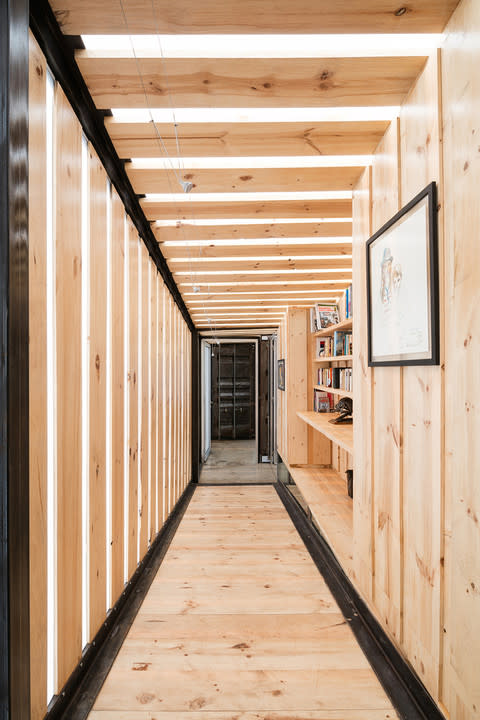
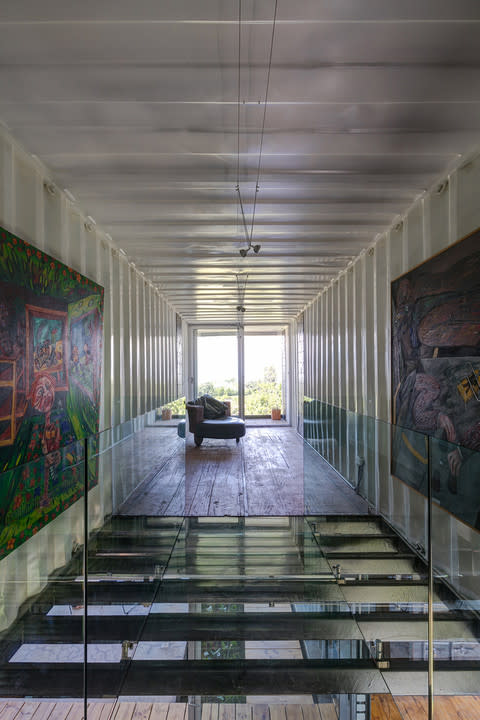
As far as trends go, few movements are as considered wholly “in” as fashioning a house out of something that’s otherwise reserved for an activity completely unrelated to housing. This week, it’s an innovative (and gorgeous) shipping container home located in Pichincha, Ecuador, which perfectly encapsulates its unique source material while remaining a pleasant place for one to lay their head.
Perhaps even more intriguing is the fact that whenever the owner feels the itch to move, they have the ability to simply disassemble the home and transport the modules to wherever they see fit. Comfortable? Check. Portable? Check. Unusual?  Check, check.
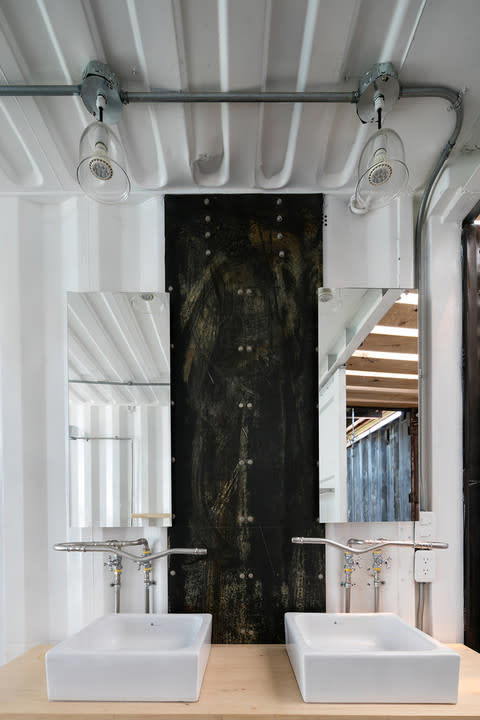
Designed and built by the architecture powerhouse couple Daniel Moreno Flores and Sebastian Calero, the shipping container home makes primary use out of, well, old shipping containers. Because of this, it exudes industrial style at nearly every corner as not only is the exterior completely reminiscent of the containers but the interior as well. The duo decided to keep the spirit of the containers to appease its client, who is an avid mechanic with special interests in motorcycles and cars while also maintaining a long-held affinity for clocks.
shipping container home ecuador daniel moreno sebasti n calero architects rpd
Lorena Darquea Schettini/Daniel Moreno & SebastiƔn Calero Architects
shipping container home ecuador daniel moreno sebasti n calero architects rpd
Lorena Darquea Schettini/Daniel Moreno & SebastiƔn Calero Architects
shipping container home ecuador daniel moreno sebasti n calero architects rpd
Lorena Darquea Schettini/Daniel Moreno & SebastiƔn Calero Architects
shipping container home ecuador daniel moreno sebasti n calero architects rpd
Lorena Darquea Schettini/Daniel Moreno & SebastiƔn Calero Architects
shipping container home ecuador daniel moreno sebasti n calero architects rpd
Lorena Darquea Schettini/Daniel Moreno & SebastiƔn Calero Architects
“When the owner was a little kid, he wanted to decipher the mechanisms of old clocks,”Flores and Calero said. “His passion for mechanics drove him into motorbikes and Land Rover cars. He was interested in a very didactic, utilitarian, and dismantable house (in the understanding of the pieces in the manner of the mechanics of these vehicles). Constructive solutions had to be visible, no matter their manufacture. When we understood this direct connection to metal, the idea and the desire to live in a container house appeared. One of the main reasons to experiment with this material was the energy saving.”
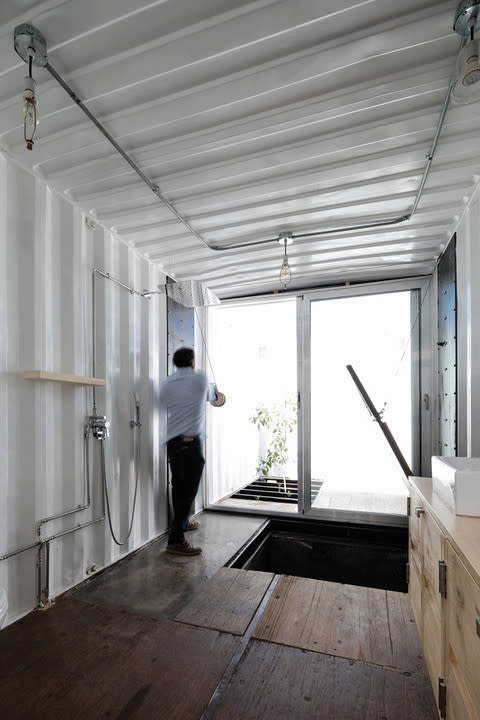
Making use of seven 20-foot containers and one 40-foot container, the duo started out by playing to its client’s needs and figuring out how to construct the home to disassemble like parts of a clock. During the process, each container’s factory paint was removed from the exterior while interior portions were painted in white or outfit with beautiful wood paneling. This approach to the inside of the home makes it uncannily cozy and livable.

Furthermore, the addition of indoor-outdoor patios and windows designed to let as much outside light pour in as possible, Flores and Calero’s home embraces the nearby Ecuadorian landscape. It may be a home made out of shipping containers but it’s perfect use of space and pairing with Ecuador’s beautiful environment make this as enviable an abode as we’ve seen.

REAL ESTATE TOPICS...Why purchasing a home at auction can be risky


By By Ilyce Glink and Samuel J. Tamkin


We bought a home at an absolute auction. The listing materials indicated that the home had a geothermal system. The seller’s disclosure statement indicated that a heat pump had been added to the home. We were told the geothermal system was in the basement.
When we walked through the home, we saw a system in the basement that we thought was a geothermal system. We also saw a radiant heat system on the second floor of the house. So in our mind we were purchasing a home with radiant heating for the floors, geothermal for heating and cooling, and also a heat pump.
The auctioneer and Realtor told everyone that the geothermal was there but needed a part. After we signed papers, we found out later the geothermal system was pulled out a year and a half earlier by the seller’s son-in-law, who had lived in the home.
The system would cost about $40,000 to replace. Do we have any grounds to collect our losses on this property against the Realtor or others? We tried to revisit the property before closing and were not allowed in to reinspect. We did file a complaint against the Realtor and the auctioneer, but their excuse was that they didn’t know. They also said it was our fault for not inspecting it better.
They have hired an attorney. Since the home didn’t have the system, we resold it at a loss.
The rule in real estate is “caveat emptor,” or buyer beware. It’s been that way for centuries and only recently have state legislatures passed laws requiring sellers to disclose known defects and other material issues with the homes they are selling.
We do think you’re at fault for not having the home professionally inspected. It seems clear that you didn’t have sufficient knowledge of the home’s systems to understand whether the home had a geothermal system or not. So if you didn’t have that knowledge or couldn’t test the systems, we are unsure why you would proceed to buy the home.
When it comes to real estate auctions, you have to be even more careful than if you buy a home directly from a seller or through a real estate brokerage firm. Homes sold at auction usually are sold as is and have no warranties in the contract. This means that a contract for a home sold at auction may give you no rights against the seller.
Given your situation and your loss, you should talk to a litigation attorney who has handled real estate fraud cases in the past. We don’t know if you will get far with the auction house or Realtor, since they may have believed that the home had the system because the seller had told them it did. The auction house and Realtor may be under no obligation to verify the information given to them by the seller.
So it may be true that the Realtor and auction house believed the system was installed when it had been taken out. However, the seller of the home may be at fault, but even the seller may not have known that the system had been removed by the son-in-law.

However, the laws in your state and your seller disclosure laws in your state might still apply and you might have an action against the seller. We don’t know for sure how far you’ll get, but you can discuss the facts with an attorney, and he or she can give you a better idea of what the cost of litigation will be and how strong a case you have.

REAL ESTATE TOPICS...How to determine whether you’ll owe the IRS when you sell your home

By By Ilyce Glink and Samuel J. Tamkin


What if you build a house but never rent it or live in it, and then sell it? How is the gain taxed?
The important information is whether you lived in the home or not. Since you never lived in the home, you wouldn’t get any IRS benefits as a homeowner selling the home. Those benefits are substantial. If you live in a home for two out of the past five years, you can exclude $250,000 in profits (or, if you are married, $500,000 in profits) from federal income taxes. But this federal tax benefit would not apply to your situation.
Let’s assume your question arises from a situation in which you purchased land, built a home, were planning to live in it but never did and now you sell it for a substantial profit. Let’s say it’s $100,000 profit. What happens from a tax perspective?
We’re sure we’ll get letters from tax practitioners on this one, but to keep it simple we’re also going to assume that you’ve owned the property for at least a year and also completed the home at least a year ago. Having assumed all that, you could be said to own an asset that you’ve had for more than one year and when you sell it, you’d pay capital gains taxes on the profit you make from the sale. So, this $100,000 profit might require you to pay about $24,000 in taxes to the IRS (the amount will depend on other deductions or credits you may have).
On the other hand, if the building of the home was part of a business to build and sell homes, the home might be considered more like the inventory of your business and in this instance, you would not get the benefits of capital gains rates on the sale of the home.

If this was the case, we’d assume you’d pay around $35,000 in taxes to the IRS. (Remember, we’re trying to keep it simple and give you a broad overview of the picture; not drill down to the details or give you precise numbers.)
In some ways, yours is a trick question because it does not give the whole picture or provide enough information to make a reasonable guess.
Simply put, if you sell a primary residence that you’ve lived in for at least two out of the past five years, you probably wouldn’t have to pay any tax on the sale, as long as your profit is below $250,000 if you’re single and $500,000 if you’re married. If you are in the business of building homes for sale to other people, you’ll have the greatest amount to pay in federal income taxes. And there is the middle ground where a variety of factors could lead to variable outcomes. For those complicated scenarios, call your accountant or tax preparers.
But the devil is in the details: You might be better off (from a tax perspective) if you rent the home for a couple of years and then sell it. Even better, if you like the home you built and can sell your current residence, you might consider doing just that and moving into your new home. If tax laws stay the same, any profit on the home you just sold would probably not get taxed (if they are less than $250,000) and if you live in this home for two years, you can sell it then and keep all the profits without paying tax (again, if the profits are less than $250,000).
There are some exclusions and limitations to the IRS home-sale rules. You can get more information at www.irs.gov.

Saturday, September 3, 2016

REAL ESTATE TIPS...How to Use LinkedIn to Reach Niche Markets

by Jacklyn Renz
We’ve all heard of the social networking site LinkedIn, which is geared specifically towards the business community. What you may have not heard is the idea of using this site and the relationships built here to reach your target market. Further still, you can grow in your specialization and reach one more network of people in your niche. Let’s take a look at a few ways to use LinkedIn to your marketing advantage.
shutterstock_170100236
Why Does It Work?
One interesting tidbit from data regarding social media’s effectiveness showed that LinkedIn produced 3 times more leads from their visitors than Facebook and Twitter. Unlike the other social networking sites that are comprised of an array of content, such as last week’s vacation photos and political opinions, LinkedIn is focused in on business. This means that visitors log on to the site already in the business mind-set, ready to dive into pertinent content for their particular situation. Less clutter means more relevant content for the visitor, which can be used to your marketing advantage.
An Extension of Your Business
Since the eyes that lay on your LinkedIn page are more than likely people or professionals interested in working with you, be sure that your company’s page means business. Take the time to craft this page into an extension of your business, filling in full details, offering appropriate tips, and topping it off with a professional, eye-catching banner. Beyond a company page, LinkedIn offers the showcase page, which is a landing page of sorts where you can link back to your official business website. You are one of several others in your field, so it’s important to stand out from the others as much as possible.
Join the Group and the Conversation
Seek out groups that fit the niche you are shooting for. Research who you are following to be sure they are offering relevant content that fits your needs. Posting pictures, blog posts, articles, news, and videos will generate more traffic to your company’s page. This builds your reputation as a respected source of information, gaining you even more access to synergic relationships. Be sure to get involved in groups that are targeted local, and use these as a platform to generate leads in your local area.

Connect One Level Deeper
Beyond following posts from afar and posting your own insights, get in a little deeper with professionals that excel within your niche. LinkedIn is a great place to seek out those who are worthy of gleaning from, based on their content, their followers, and their professional experience. Don’t be afraid to reach out with a message to seek out advice on your niche market.
There are a plethora of free business tools on LinkedIn to propel your business forward. Dig in to see how this site can help you extend your reach beyond the conventional ways.

Thursday, September 1, 2016

REAL ESTATE TOPICS...What more than 1 million Craigslist rental listings tell us about the housing market

By Emily Badger

Craigslist, with its drab gray interface and homemade classifieds, has become the single largest information exchange about the rental housing market in the United States. Its digital bulletin boards have everything: apartment porn for places you'll never afford, weird fish-eye photos by amateur landlords, queries for every conceivable living space from a spare bunk to a full-sized mansion.
The site touches both the high and low ends of the market — the mom-and-pop operation and the professionally run high-rise — across hundreds of locations. And so Craigslist effectively has more pricing information than commercial providers of rental data do — and offers a more real-time look at the housing market than does the Census Bureau.
"We were looking for something more comprehensive, fresher in time, and smaller in spatial scale," said Geoff Boeing, a PhD candidate in the Department of City and Regional Planning at the University of California at Berkeley. "Craigslist seemed like an obvious candidate."
Boeing and Paul Waddell of the Urban Analytics Lab at Berkeley scraped millions of listings off the site from the summer of 2014. The data they sorted, described in new research — and mapped below — reveals some familiar patterns: New York, the Bay Area, Boston and energy-booming North Dakota have the highest median rents on offer in the country (in the map, red is the most expensive per square foot). And many of these same markets have a paltry share of listings at price points that would be affordable to moderate-income households.


1.5 million rental listings on Craigslist, mapped by cost per square foot. (G. Boeing and P. Waddell in the Journal of Planning Education and Research)

But the data also gives a fascinating look at the whole spectrum of offerings in each Craigslist market. In this graph from the research, each line represents a single metropolitan area, with its distribution of listings ranging from the cheapest at the left to the most expensive at right ($4 per square foot would be the equivalent of a 1,000-square-foot rental for $4,000 a month, which is not uncommon in New York). The lines peak at the most common per-square-foot price point in each area. As with the above map, the markets with the highest median rents are red; those with the lowest are blue and purple:
That picture shows that affordable cities have more compressed rental markets on Craigslist, while the distance between high- and low-end units in expensive cities is much wider. Detroit is narrow and spiky. New York is low and stretched out. Detroit's pricey units are not that pricey, and that segment of the market is much smaller.
Put another way: If you have a little extra money to spend on rent in Detroit, it will get you a lot more than in New York, bumping you from near the bottom to the top of the market more easily.


In the Bay Area (which Craigslist defines much more broadly than just the city of San Francisco, encompassing San Jose, Santa Cruz, Oakland and outlying suburbs), there are hardly any units available at the per-square-foot prices that cover most of the Atlanta-area market:
Across all these places, the correlation is striking between the typical rent in a given market and the degree to which the market is compressed.
"We didn’t know what the pattern would look like," Boeing said. "We didn’t expect it to be so clear."
This pattern also illustrates why moderate-income households — and even middle-class ones — have such a hard time finding affordable units in expensive cities. There just isn't much on offer at cheaper prices. And this pattern implies that a subsidy like housing vouchers in low-cost cities may have a lot more power to lift the poor into higher-quality units and safer neighborhoods.
These pictures are not perfectly representative of the entire rental market in each region. Like census rental data, which lags in time, and commercial data, often drawn from large apartment buildings, Craigslist has its limits as a window into the housing market. It may exclude landlords uncomfortable with the Internet (or who believe their potential tenants might be). It captures only asking prices, not agreed-upon rents, so it doesn't reveal the effect of bidding wars that might drive up rents in high-cost cities.
And the quality of the data is better in some markets than others. The listings in Seattle and Los Angeles, Boeing and Waddell found, tend to have more complete information. In Chicago and New York, listings are more likely to be posted multiple times. New York's rental market is alsoheavily influenced by brokers, meaning units are less likely to wind up on Craigslist.
Boeing and Waddell originally scraped about 11 million listings off the site, covering everything posted in all the U.S. sub-domains between May and July of 2014. But by the time they deleted duplicate listings and inevitable Craigslist spam ("Apartment of $1!"), and sorted for only units with clear price and square footage data and geolocation, they were down to about 1.5 million listings nationwide.

That's still more comprehensive than many alternatives. And Craigslist has the potential to detect patterns other data sets can't, such as how quickly rents rise over time — in real time — in a single neighborhood.